
Removing large branches
If branches are cut off too close to the trunk of a tree or shrub, the weight of the branch is likely to tear away from the main plant, damaging the bark, leaving a nasty scar and creating a larger area that may increase the chance of letting disease enter the wound. There is a better, safer way to remove unwanted branches:
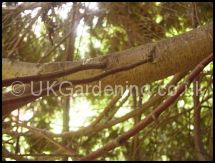
Step 1.
Remove any small branches from the branch you are about to lop off. Doing this first will make the job a lot easier and safer, it will also enable you see what you are doing.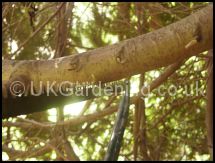
Step 2.
About a foot (60cm) from the trunk, undercut the branch. Making an upward cut about half to two-thirds through the branch.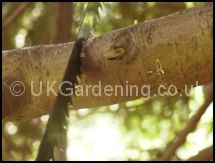
Step 3.
Make a downward cut, 3-4ins (4-10cm) further along the branch than your first upward cut.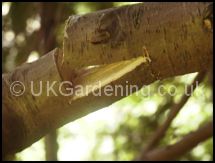
Step 4.
As you continue the downward cut, you'll find that the weight of the branch will collapse the bottom cut, the branch will then tear along it's length until it meets the lower cut that you made earlier.
Carry on the downward cut until the branch comes away completely.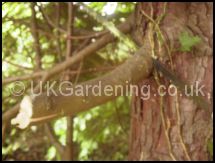
Step 5.
The short stump you are left with can now be removed, sawing as close to the trunk as possible.
There are two schools of thought about what to do with the open wound. Traditionally, Arbrex was painted over the fresh cut, to stop disease entering the newly exposed plant tissue, however some experts now question whether this is really necessary and whether it traps moisture and disease (from cutting equipment) between the coating and the cut. Preferring to let the tree recover on it's own.
Other gardening how to pages:
- Growing plants from seed
- Create a hanging basket
- Laying a new lawn
- Making leaf mould
- Chitting and growing potatoes
- Care of Hippeastrum/Amaryllis after flowering
- Cleaning patios, paths and decking
- Removing large branches
- Creating a compost heap
- Moving a tree or large shrub
- Fencing and trellis
- Building a rockery
- Planting a winter basket
- Building a pond
- Make a large spirit level
